


Posted by Happy Trails Medicinals on Nov 23rd 2026
"Is CBD Safe for My Kid?" And 7 Other Questions Parents Google at Midnight
You know the moment.
The house is finally quiet. You should be asleep. Instead, you're lying in bed with your phone an inch from your face, typing things like "natural ways to help kid focus" and "is CBD safe for children." Then you fall down a rabbit hole of forums, conflicting articles, and at least one website that looks like it was built in 2004.
If that's how you ended up here, welcome. You're in good company.
We talk to curious parents every single day, and most of them have the same handful of questions. So we're putting the honest answers in one place, no hype and no pressure.
First, the question behind all eight questions:
Is CBD safe for my kid? We don't have enough evidence to say that over-the-counter CBD products are safe for routine use in children. CBD can cause side effects and interact with medications. Although a prescription CBD medicine is approved for certain seizure disorders, that does not establish the safety or effectiveness of retail CBD products for children's focus, sleep, or everyday wellness.
1. "Will it get my kid high?"
CBD and CBG come from hemp, and they're generally considered non-intoxicating. Unlike THC, they aren't known for producing the characteristic cannabis high.
But there's an important catch: "THC-free" on a label isn't the same as a guarantee of zero THC. Broad-spectrum products are typically formulated to remove THC, while full-spectrum products may contain some THC. Independent, batch-specific lab testing helps you understand what's actually in a product.
And even when a product has no detectable THC, that doesn't automatically make it safe for a child.
2. "Okay, but what does it actually do?"
Everyone has an endocannabinoid system. It's a signaling network involved in regulating functions such as sleep, appetite, and responses to stress.
CBD and CBG interact with biological pathways connected to this system, although their effects are complex and still being studied.
That's why you may see CBD marketed for calm, focus, or settling in. But those marketing claims are not the same as proof that CBD or CBG helps children concentrate, manage ADHD, or sleep better.
What parents should know
Research on CBD in children is limited outside certain medical indications. For everyday attention or behavioral concerns, a pediatrician can help identify evidence-based approaches and determine whether further evaluation is needed.
3. "My child takes medication. Is this a replacement?"
No, and please don't stop or change any prescription without your child's doctor.
We want to be really clear about this, because there's a lot of "either/or" talk online.
Some kids benefit from prescribed medication. Others benefit from behavioral support, changes at school, improved routines, or a combination of approaches.
There's no shame in getting your child the support they need. The goal isn't to pick a team. It's to find what helps your kid, with guidance from qualified healthcare professionals.
Over-the-counter CBD and CBG products are not established replacements for prescribed ADHD medication or other pediatric treatments.
4. "Can CBD and medication be taken together?"
This one is a real conversation for your pediatrician, not the internet.
CBD can affect how the body processes certain medicines, including through liver enzyme pathways such as CYP450. Some of these pathways are also involved in the well-known grapefruit interaction with medications.
But that doesn't mean the grapefruit warning is a complete checklist for CBD interactions. The risks depend on the specific medicine, the cannabinoid product, and the individual.
Your child's doctor or pharmacist can review the medication list and explain what concerns apply.
5. "Isn't it the same as the stuff at the gas station?"
We'll be honest: quality can vary a lot, regardless of where a product is sold.
Most retail CBD supplements are not evaluated for safety and effectiveness in the same way as FDA-approved medicines. That's why understanding what's inside the bottle matters.
Before evaluating any cannabinoid product, look for three things:
THC Information
Understand whether the product is broad spectrum or full spectrum, and what its lab report says about THC.
Third-Party Testing
Look for a recent, batch-specific Certificate of Analysis (COA) that also checks relevant contaminants.
Clear Labeling
Check the cannabinoid content per serving, ingredients, and manufacturer information.
These checks help evaluate product transparency. They do not establish that a product is appropriate for children.
6. "Gummy or tincture?"
For adults exploring cannabinoid products, the main difference is the format.
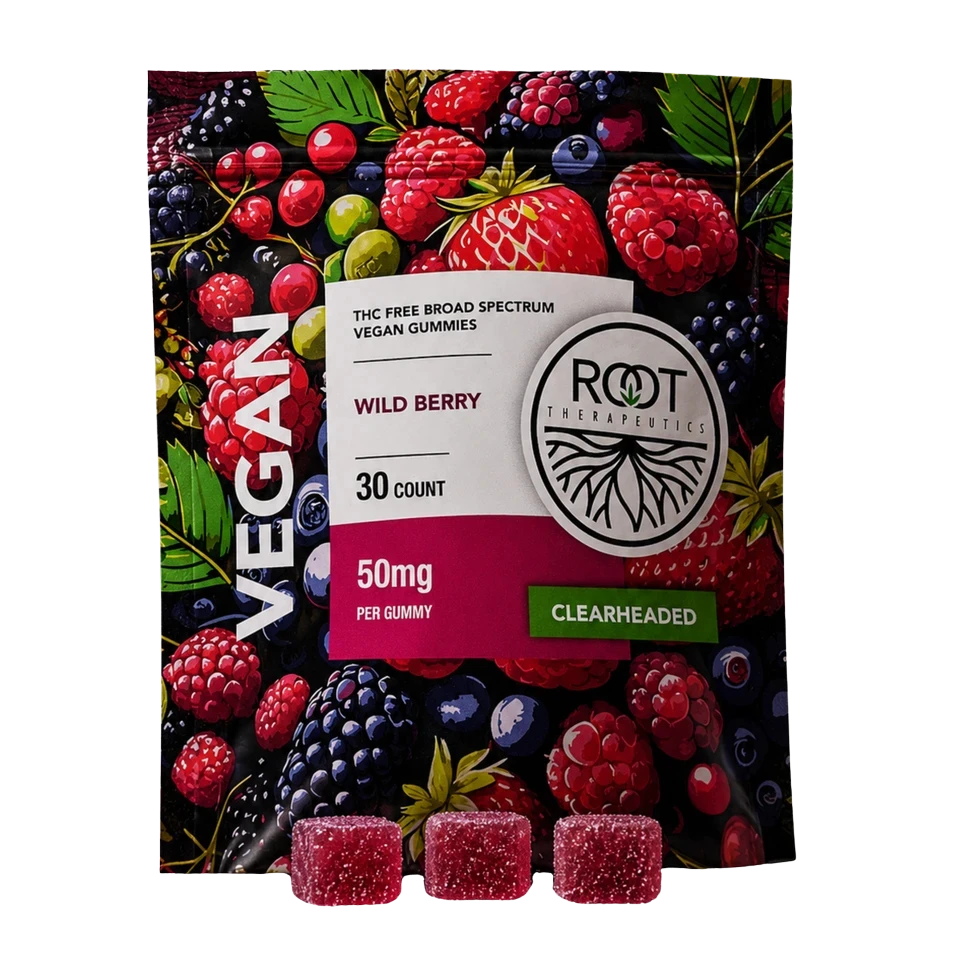
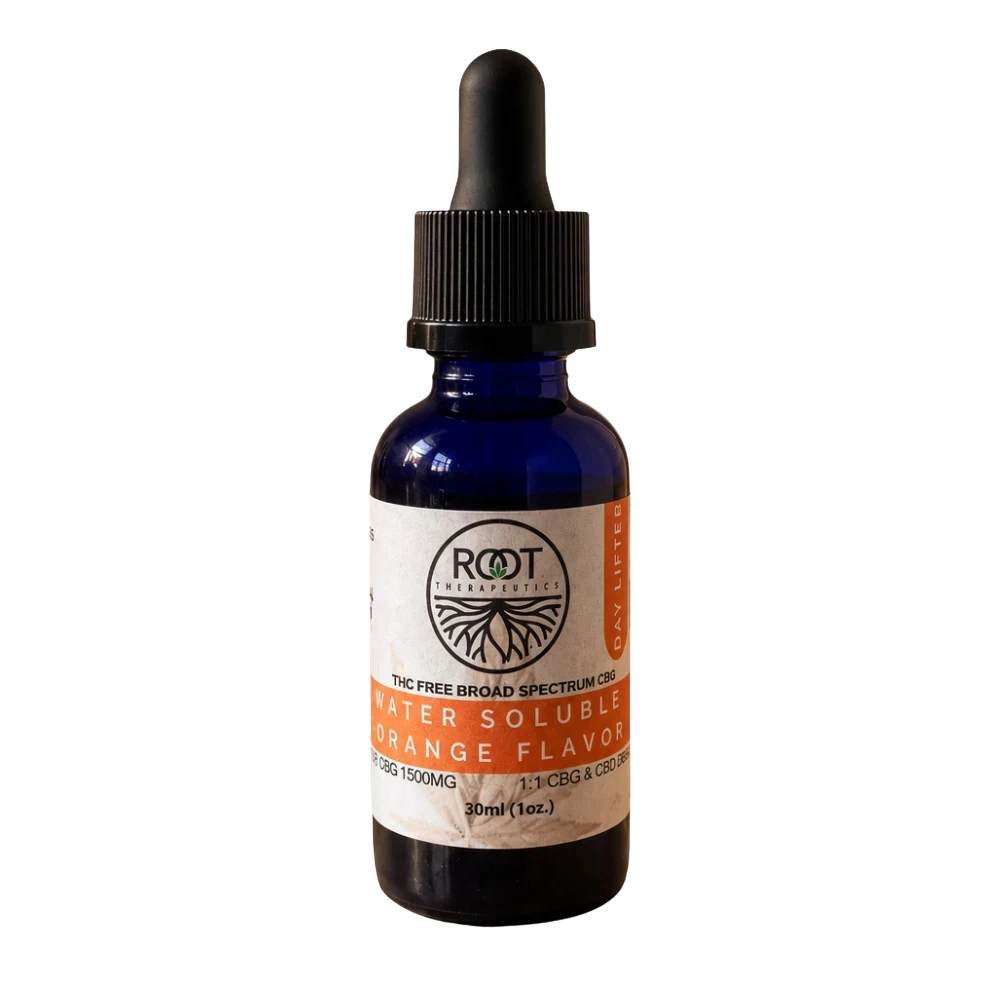
Gummies offer a premeasured amount per piece. Tinctures are liquids, and some water-soluble formulations are designed to disperse in beverages.
For children, though, convenience isn't the deciding factor. Gummies can be mistaken for candy, and liquid formulations can make it easy to overlook how much cannabinoid is being consumed. Neither format is automatically safe or suitable for pediatric use.
These are two ROOT Therapeutics formulations customers ask us about. They're included here to help explain the product differences, not to recommend them for children.
7. "How would I even know if it's working?"
Go slow and pay attention, but start with the things you can safely observe before introducing any new supplement.
Keep a quick note on your phone about mornings, homework, mood, and sleep. Small patterns are easy to miss day to day, but they may become clearer when you look back over a week or two.
Bring those observations to your child's next appointment. Your pediatrician can help decide whether further assessment, changes to daily routines, or evidence-based treatment would be useful.
If cannabinoid products come up, discuss the evidence, possible side effects, and medication interactions before making any decisions. Don't start or adjust an over-the-counter CBD regimen for a child on your own.
8. "What should I ask my pediatrician?"
Screenshot this list for your next visit:
Questions to Bring to Your Child's Doctor
- What might be contributing to my child's focus, mood, or sleep difficulties?
- What treatments or supports have good evidence for my child's age and needs?
- What do we know about the safety and effectiveness of CBD in children?
- Could CBD interact with anything my child is taking now?
- What side effects or warning signs should I know about?
- If we make changes to our routine or treatment plan, how should we track progress and when should we check in?
Still have questions? That's a good sign.
It means you're doing your homework, and that's exactly what a thoughtful parent does.
We'd love to help you sort through the terminology, labels, and lab reports, in person or online. And if you'd like to hear how one of our own families approached these questions, read Kayla's story once it's live.
Have Questions? Let's Talk.
At Happy Trails, we believe informed conversations matter more than quick promises.
Our team can help explain cannabinoid differences, product ingredients, and third-party testing. For decisions about your child's health, keep their pediatrician at the center of the conversation.
BOOK A CONSULTATIONThese statements have not been evaluated by the Food and Drug Administration. These products are not intended to diagnose, treat, cure, or prevent any disease. This article is for educational purposes and is not medical advice. Over-the-counter CBD and CBG products have not been established as safe or effective for children's attention difficulties. Consult your child's healthcare provider before considering cannabinoid products, and never stop or change prescribed medication without medical guidance.